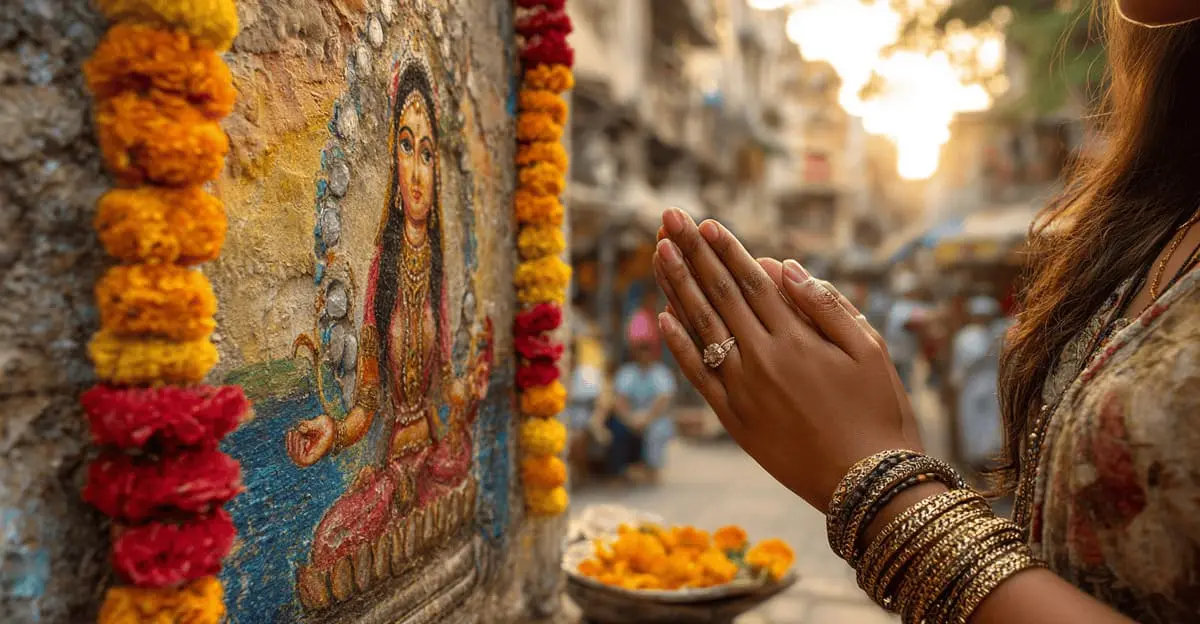
Money in India: Exchange, Withdrawal, and Tips for Travelers
What is the Indian currency?
The official currency of India is the Indian rupee. It is divided into one hundred units, called paisa.
As of 28/09/2026, the Indian rupee (INR) was exchanging at per (excluding bank commissions and exchange fees). Therefore, 10,000 rupees amount to approximately .
How to pay in India?
In India, you can pay:
- In local cash: It's advisable to always carry some cash, especially in small shops, markets, or rural areas.
- By bank card: International cards (Visa, Mastercard) are widely accepted in hotels, restaurants, shopping malls, and major stores in cities. However, check if there are bank fees for foreign transactions.
How to get Indian rupees upon arrival?
Bring cash with you: Euros or dollars, ideally in large denominations (50, 100, or 200 EUR/USD) to get better exchange rates.
It’s legal to enter India with up to 5,000 USD equivalent in cash per person. Amounts exceeding this require a customs declaration.
Avoid airport currency exchange counters: Their rates are highly unfavorable. If needed, your driver can provide initial rupees upon arrival.
Currency exchange offices are available in all major cities and tourist sites. On arrival day or the next morning, your driver/guide will take you to reputable exchanges with better rates. Check online exchange rates and negotiate slightly for optimal rates!
What do the banknotes and coins look like?
India runs mostly on banknotes, supplemented by coins for small everyday purchases (buses, chai, tips). The banknotes in circulation range from ₹10 to ₹500: 10, 20, 50, 100, 200, and 500 ₹. Each one features a portrait of Mahatma Gandhi on the front and an iconic monument on the back — the Red Fort of Delhi on the 500, the Sanchi Stupa on the 200, the Rani ki Vav stepwell on the 100. (The ₹2,000 note having been demonetized — see above —, it's no longer in circulation.)
Reminder: On May 20, 2023, the Reserve Bank of India announced its decision to withdraw 2,000 ₹ banknotes from circulation. These notes could still be exchanged or deposited into an Indian bank account until October 7, 2023. The 2,000 rupee note is now demonetized.
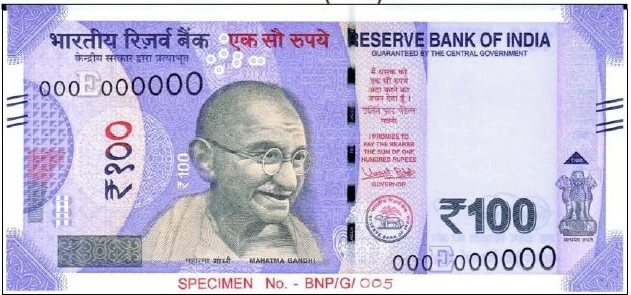
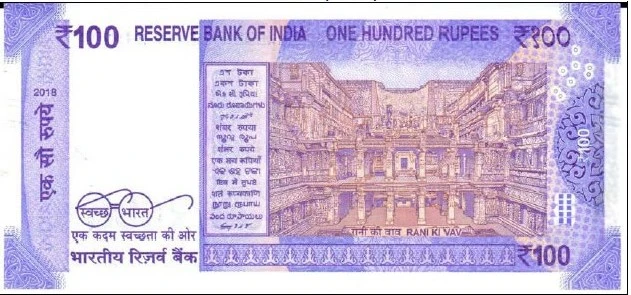
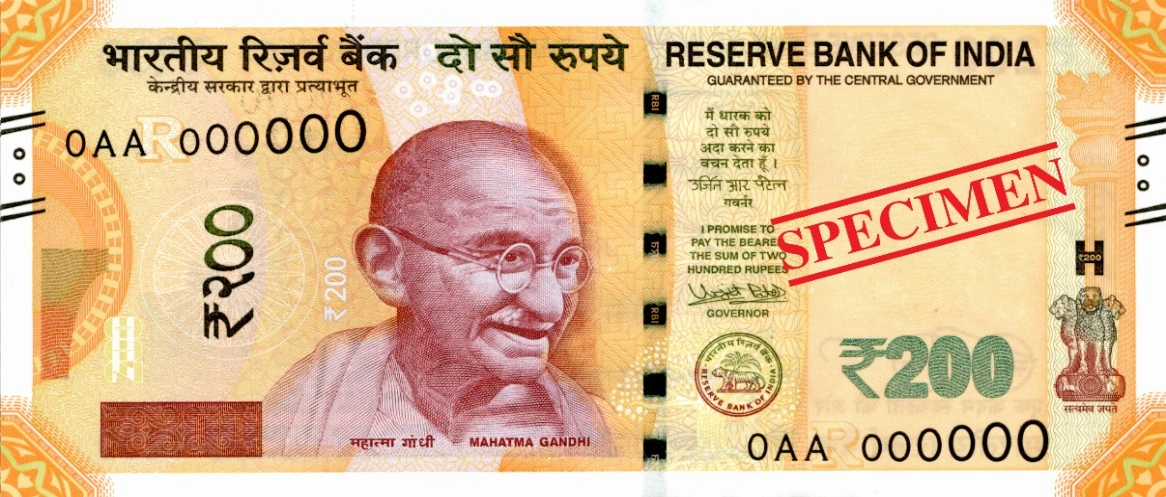
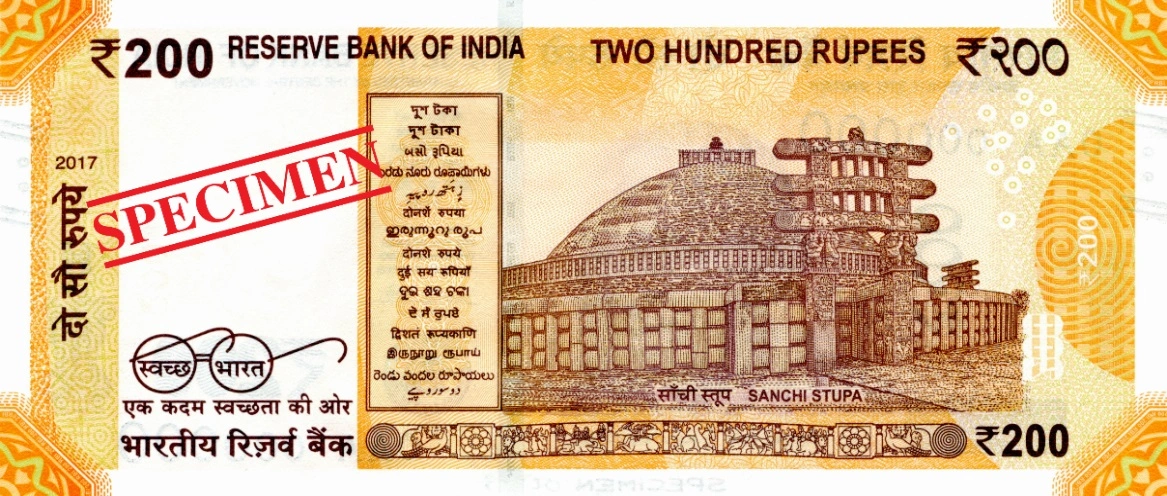
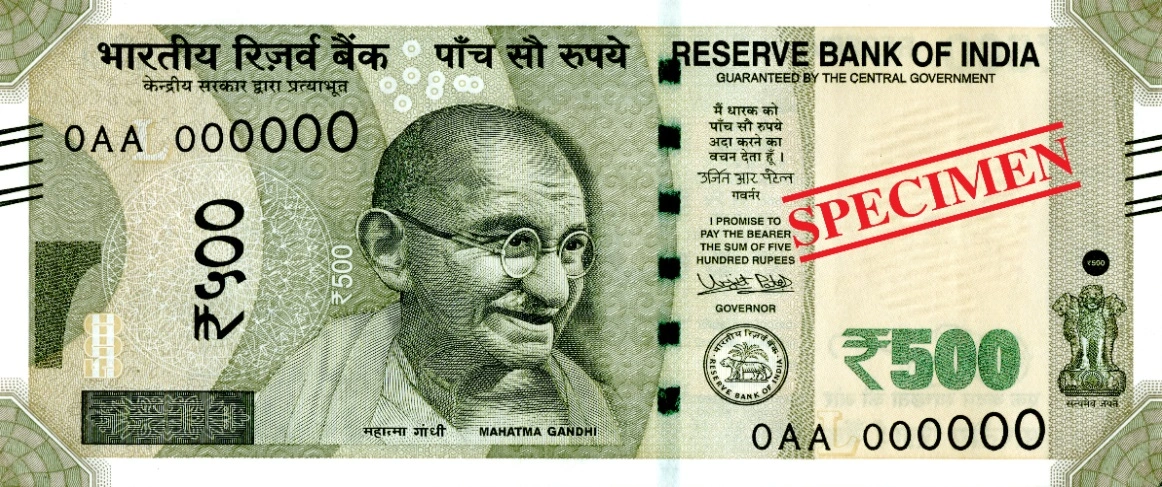
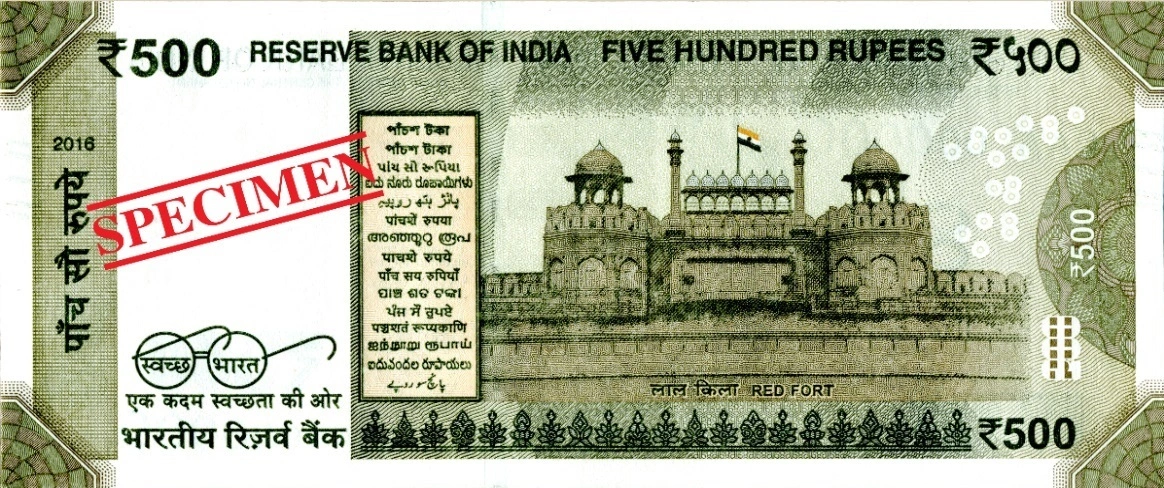
Banknotes: Reserve Bank of India / Government of India ("India new 100 / 200 / 500 INR, MG series"). Published under the Government Open Data License – India (GODL).
The common coins are 1, 2, 5, 10, and 20 ₹, handy for small payments. Tip: favor small denominations (100, 200 ₹) for everyday use: markets, tuk-tuks, and stalls often struggle to make change for a large note. Also avoid badly torn notes, which vendors sometimes refuse.
How do ATMs work in India?
Bring at least two bank cards from different networks. This increases withdrawal success chances.
The maximum withdrawal per transaction is 10,000 rupees (≈). Multiple withdrawals are possible. Account for bank fees and confirm international withdrawal/payment charges with your bank beforehand.
Warning: Some travelers couldn’t withdraw because their "international withdrawal" option was inactive. Verify with your bank that your card is enabled for India before departure.
While ATMs were ubiquitous in India, mobile payments have significantly reduced their numbers recently.
How to obtain Indian rupees?
Travelers have several options:
- Airport currency exchange: Not recommended. Rates at Indian international airports are typically poor.
- ATMs: Convenient but beware of international withdrawal fees.
- Local banks: Some Indian banks exchange currency for foreigners (ID required).
Can Indian rupees be used outside India?
The Indian rupee has no legal value abroad. If traveling to Nepal afterward, you can exchange leftover rupees at India-Nepal border posts or in Kathmandu.
Import/export of rupees is prohibited (limit: 25,000 INR). Returning to France with small amounts is low-risk. Rupees can occasionally be found in Paris’ Indian neighborhoods, but this has limited utility.
Do Indians still prefer cash?
Traditionally cash-reliant, India’s mobile revolution has transformed payments. Banknotes are now less dominant in wallets.
Today, mobile solutions like Google Pay (GPay) or Paytm are the preferred payment methods for most Indians, including rural areas. A smartphone suffices for street-side chai or market vegetables—efficiently simplifying daily transactions.
Should you bring traveler’s checks to India?
Once popular, traveler’s checks are declining due to ATMs and mobile payments. They’re cumbersome: requires safeguarding checks, serial numbers, purchase proofs, and encashment certificates. Losses require contacting the issuer.
Revolut and Wise: Ideal multi-currency cards for India
India’s payment landscape is digital-first. While GPay/Paytm dominate locally, international travelers benefit from multi-currency cards like Revolut and Wise. Their advantages? Market-aligned exchange rates and transparent fees (e.g., Revolut offers free monthly withdrawals up to €200). Still, carry some cash rupees for traditional shops.
Enjoy your trip to India!