How to Get a Tourist Visa for India?
Tourist Visa for India, E-Visa: How Does it Work?
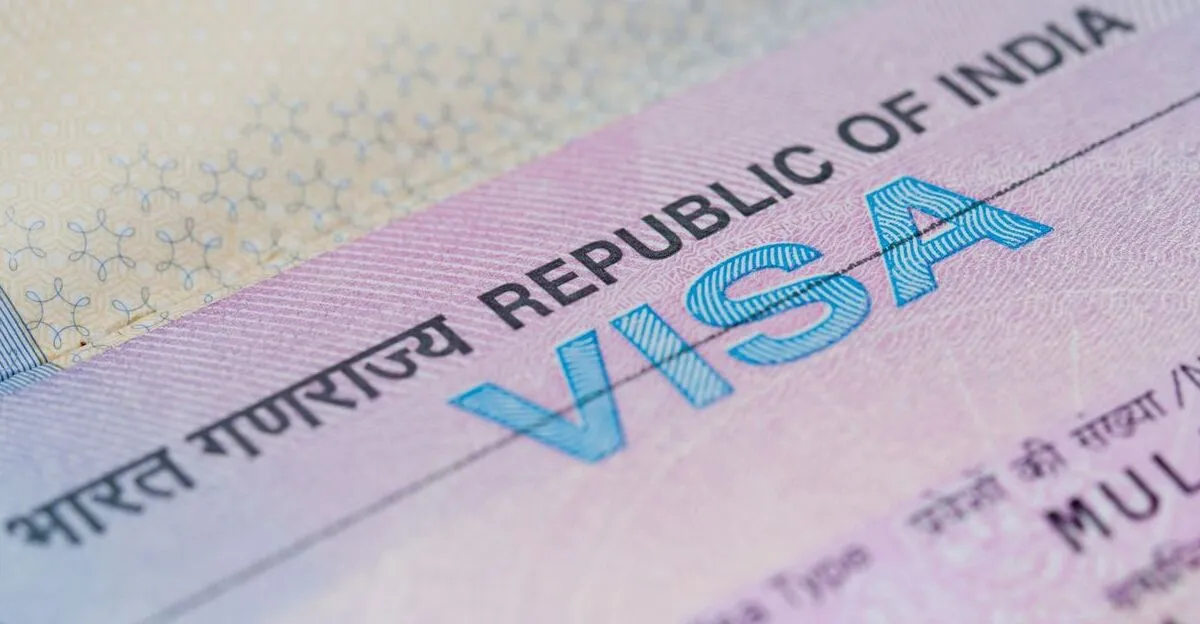
For any stay in India, it is necessary to obtain a visa, whether stamped in your passport or in electronic form (E-Visa). Here are the required documents to apply for an Indian tourist visa:
- A passport valid for at least 6 months after your intended arrival date in India, with at least three blank pages (including two facing pages).
- A recent square-format photo. If a paper print is required, the dimensions must be 2 x 2 inches.
- A duly completed application form, including the full contact details of a reference in India.
- For minors traveling with only one parent: a signed parental authorization from the non-accompanying parent.
Regarding the photo: A simple selfie taken with a mobile phone may be acceptable, provided the photo is well-lit and taken, preferably, against a white or neutral background. You can use free online photo editing tools like iLoveIMG to crop your photo to the required square format.
How to Apply for an Indian Visa?
-
Visa application through the Indian mission in your country: If you are not eligible for the e-Visa, you must apply for a physical visa through the Indian embassy or consulate in your country of residence. Most missions no longer accept applications directly and instead route them through an authorized visa service provider, whose name and procedures vary from one country to another (for example, Alankit in Germany). The visa is affixed to a blank page in your passport. The process is more demanding: higher costs, longer processing times, and mandatory deposit of your passport.
-
Online visa application: It can be done directly on the Indian government's official website by filling out the form at: https://indianvisaonline.gov.in/evisa/tvoa.html. There are three different durations for the E-visa: 30 days, 1 year, and 5 years. At the end of the process, you will receive by email, within 24 to 48 hours, a one-page document to print, called ETA, which you will present at boarding with your passport. Important note: unlike the visa affixed to the passport, the E-visa does not allow crossing land borders — with the exception of the India–Nepal border crossing at Raxaul, the only one that lets you take a bus between India and Nepal, or vice versa.
For most travelers, the e-visa is the most convenient and economical option. Just note that if you wish to cross land borders other than Raxaul, you will need a classic visa affixed to your passport.
For Stays in India of 30 Days or Less
The 30-day visa formula (not one month) is obviously sufficient. December 2025 update: you can now complete this process up to 120 days before your planned arrival date in India (and at least 4 days before).
For Stays in India of More Than 30 Days
For stays longer than 30 days or for multiple stays, opt for a one-year or five-year visa. These visas can also be requested up to 120 days before your arrival. With this type of visa, each of your stays in India must not exceed 90 days. After this period, you must leave Indian territory, but a round trip, even made in the same day, to a nearby destination (Sri Lanka, Nepal, etc.) is possible to extend your stay. Note that with a simple e-visa, the total duration of stay cannot exceed 180 days per calendar year.
How to extend my visa in India?
In general, it is not possible to extend an e-visa or a standard tourist visa once you are in India. The usual solution is to leave Indian territory, even briefly (Nepal, Sri Lanka…), and re-enter with a new valid visa.
However, in cases of exceptional circumstances — health issues, natural disasters, major transport disruptions or any other situation beyond your control — exemptions may be granted. The Indian Ministry of External Affairs (MEA) recommends that any stranded foreign traveller contact the nearest Foreigners Regional Registration Office (FRRO). This authority is empowered to review your situation and, if the grounds are valid, to extend your visa or regularise your stay.
For any procedures with the FRRO, you can also complete your request online via the official portal: indianfrro.gov.in.
Upon Arrival in India
The visa will be stamped on your passport upon arrival at one of the authorized entry points. Special E-visa counters are available for formalities.
International airports accepting the e-Visa (32): Ahmedabad, Amritsar, Bagdogra, Bengaluru, Bhubaneswar, Calicut, Chandigarh, Chennai, Cochin, Coimbatore, Delhi, Gaya, Goa (Dabolim), Goa (Mopa), Guwahati, Hyderabad, Indore, Jaipur, Kannur, Kolkata, Lucknow, Madurai, Mangalore, Mumbai, Nagpur, Port Blair, Pune, Surat, Thiruvananthapuram, Trichy, Varanasi and Visakhapatnam.
Seaports accepting the e-Visa (6): Chennai, Cochin, Goa, Mangalore, Mumbai and Port Blair.
Land border accepting the e-Visa (1): Raxaul (India–Nepal border).
2026 update: online health declaration (Air Suvidha)
In addition to the e-Arrival Card (see below), since late June 2026 the Indian authorities require a mandatory online health declaration from all travelers, to be completed before your arrival in India. This is a reactivation of the Air Suvidha system, linked to the public health emergency declared by the WHO over the Ebola/Bundibugyo outbreak — so this requirement has no fixed end date and could be lifted or reinforced at short notice. This formality is done on the official Air Suvidha portal: airsuvidha.civilaviation.gov.in. It must be submitted no later than 24 hours before your arrival in India — the simplest approach is to fill it in when you check in online for your flight.
⚠️ Please double-check this requirement shortly before departure, as it may change quickly depending on the health situation.
New e-Arrival Card Requirement (mandatory since October 1, 2025)
As of October 1, 2025, the Indian authorities require all foreign travelers to complete an online e-Arrival Card. It can be accessed via the official portal indianvisaonline.gov.in/earrival or through the "Indian Visa Su-Swagatam" mobile app (available on iOS and Android), and definitively replaces the paper formalities as of March 31, 2026. It allows travelers coming to India for business, tourism, a conference or any other purpose to submit their details (passport, flight, address of stay, purpose of travel) before arriving in the country.
The form must be completed within the 72 hours before arrival (the portal does not accept submissions made earlier). Once submitted, a QR code is always generated: keep it and present it at check-in and then at immigration control. Practical tip: take a screenshot or email it to yourself in addition to keeping it on your phone, so you're not left searching for it at the counter.
Please note: this formality does not replace a visa or e-visa, but comes in addition to the existing entry requirements, with the aim of smoothing border controls.
How Much Does an Online Visa Application Cost?
Consular fees for a tourist E-visa are payable online and amount to:
- 25 US dollars for a 30-day E-Visa,
- 40 US dollars for a one-year E-Visa,
- 60 US dollars for a five-year E-Visa.
Warning! Some bank cards are not accepted. The only possible option then remains payment through PayPal.
Important:
After payment, you will receive a "Granted" ETA by email within 24 to 48 hours, to be presented at boarding and to Indian customs.
Agencies Facilitating Online Visa Applications
Some online agencies, presenting themselves ambiguously, give the impression of being mandated by the Indian government to issue E-visas, which is absolutely false! We warn you against these agencies, which charge high fees and may mishandle your applications, potentially leading to rejection by the consular service.
Bindi Travel Assistance Service
If you prefer to delegate this process, Bindi Travel can handle it for per visa. This service includes:
- Adjustment of photo and passport files,
- Verification and input of information for the visa application,
- Tracking of your application,
- Sending your E-visa by email.
This service is reserved for Bindi Travel customers.